An average home fills three to four storage containers, and each one holds seven cubic metres. Knowing that in advance is most of what people want when a chain slips. The sale completes, the purchase moves back a month, and the immediate question is not really where the furniture goes. It is what this is going to cost and how much handling everything has to go through.
The answer to the second part is once. Containers come to your house, are loaded there, sealed there, and are not opened again until you ask for them.
A typical job of this kind
| Move type | House removal with household storage and redelivery |
| Typical trigger | A chain delay, a renovation, or temporary accommodation |
| Container size | 7 cubic metres, or 35 square feet |
| Typical volume | Three to four containers for an average home |
| Method | Loaded at your door, inventoried, sealed on site, stored at Knowsley |
| Term | Short or long, with the ability to upgrade or downgrade |
Loaded at your house, not at a warehouse
The containers arrive at your property and your belongings go into them there, in front of you. Nothing is loaded loose into a van to be sorted out later at a depot. If you don’t need a full container we also offer mobile storage for smaller loads.
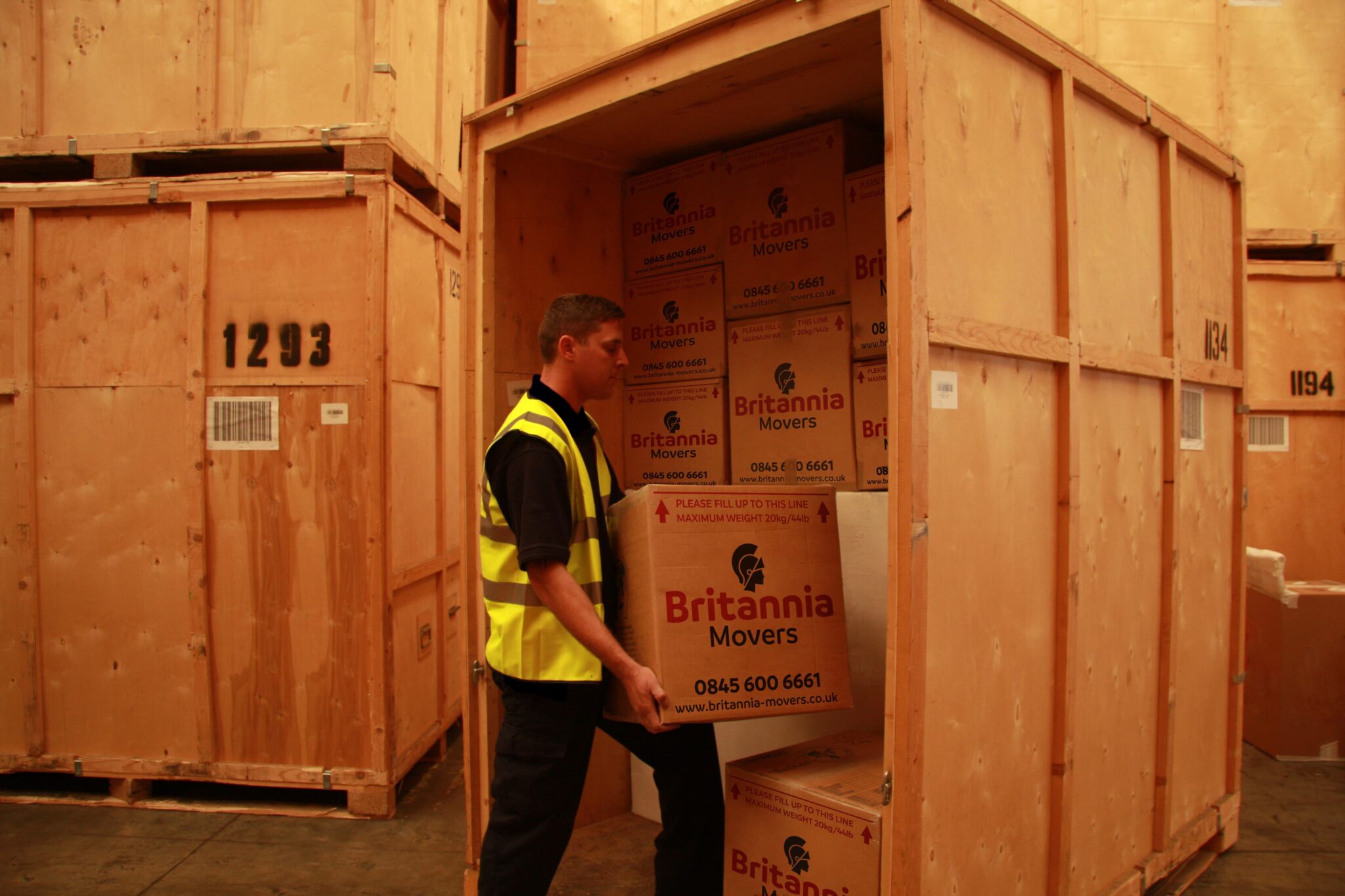
Everything is inventoried and listed as the containers fill, and an inventory is prepared for each individual container. That last detail matters more than it sounds. If you later need one specific thing out of store, the paperwork tells us which container to open rather than which four.
Sealed on site
Once a container is full it is sealed there and then. It stays sealed until you want it, and you have the list of what is in it. That is the difference between storage you can account for and storage you have to take on trust.
Handled once
The sealed containers are transported to Knowsley and mechanically unloaded into the warehouse as complete units. Nothing gets unpacked, carried and repacked in between.
Fewer handling steps means fewer opportunities for damage, which is why container storage generally works out better than moving a household into a self storage unit by hand. It is also usually cheaper, because you are not paying a crew to do the work twice.
How long, and what happens if it changes
You do not need an end date at the start. Containers can be upgraded or downgraded if what you need changes, so a three-week gap that turns into three months is an adjustment rather than a renegotiation.
The warehouse is insulated and vented, on a site with security guards, CCTV and fire alarm systems.
Getting it back
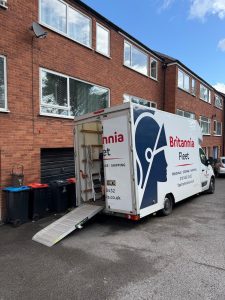
When your purchase completes, the containers are loaded onto specialist container vehicles and returned to the new property, subject to access, where the crew does the unloading. Book the redelivery date as early as you can, because completions cluster at month end and Fridays go first.
If you need to get at things while they are stored
Container storage suits a household going in and coming back out in one go. If you will want regular access, self storage or mobile storage is the better fit, and the survey will tell you which.
Accreditations
- Member of the British Association of Removers
- Independently audited against BS EN 12522, the British and European standard for domestic removals
- Active member of the Britannia Movers Group, the UK’s largest network of family-owned removal companies
- Established 1972, still family run, and now second generation
Book a free survey
Tell us the address and roughly when the gap starts, and we will work out how many containers you need. Call 0151 482 0432, email sales@fleetremovals.co.uk, or use the quote form.
Related pages
Household Storage | Storage Solutions | Self Storage | House Removals Liverpool